Living Laboratory: Can one classroom really hold an entire nation?
At SMK Bakti Karya Parigi, diversity is lived at the dinner table, in the classroom, and between lessons. The harder question is what it takes to sustain it.
01 / One table, many origins
The scene is ordinary. That is the point.
A 15-year-old student from Papua sits down to eat with classmates from Aceh, Kalimantan, and Nusa Tenggara. They bring different religions, languages, and ways of seeing the world. At SMK Bakti Karya Parigi in Pangandaran, West Java, this is part of school life, not a special event.
The author describes a community of more than 250 students from 28 provinces and 58 ethnic backgrounds living and learning together. Those figures describe this school's account of its student community; they are not a national census.
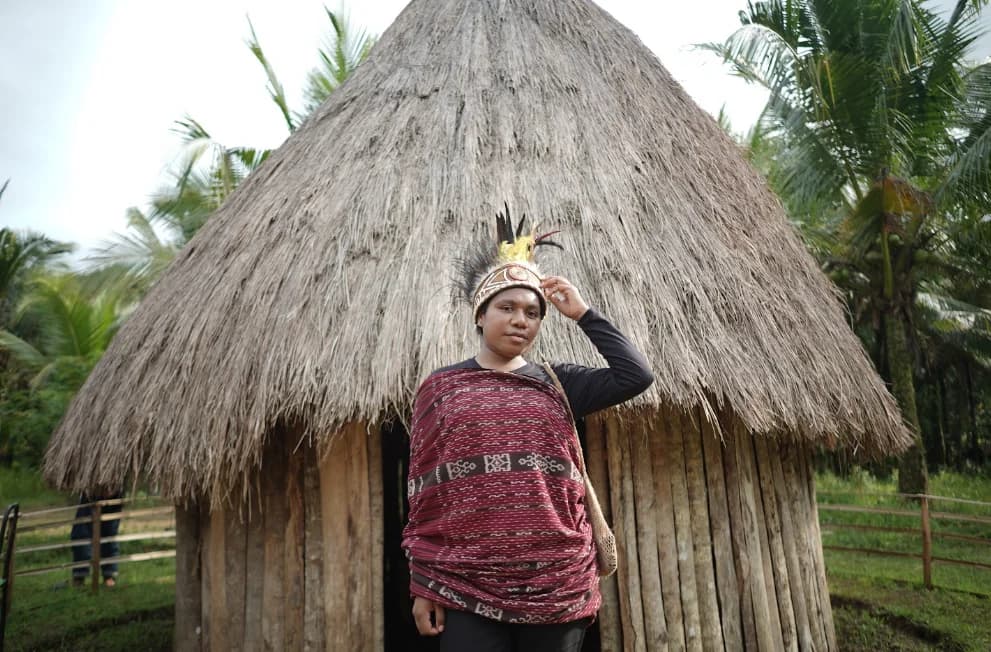
National diversity is even harder to reduce to one number. The 2010 census used 1,331 ethnic classification codes, including alternate names and subgroups. That is a measure of classification complexity, not 1,331 wholly separate ethnic groups.
02 / The everyday design
Proximity alone does not create belonging
The school's diversity matters, but the essay argues that its daily routines matter more. Students and teachers share meals. Learning can spill outside formal classrooms. Cultural and religious practices have room in ordinary life.
01Meals are sharedStudents and teachers meet beyond the classroom.
The essay describes teachers eating alongside students. Repeated informal contact gives people time to know one another as individuals, rather than only as representatives of a place or group.
02Difference is visibleCultural and religious practices belong in ordinary school life.
The account emphasizes routine space for different traditions, rather than occasional displays of diversity. The distinction matters: belonging grows through daily permission to be oneself.
03Learning continues outsideInformal activities extend the work of the classroom.
Outdoor activities and shared routines create more chances to practice curiosity, cooperation, and respect. The school is presented as a living environment, not only a timetable of lessons.
Open each practice for context. The main argument is also available in the text above.
03 / An outsider's view
What a visiting counselor noticed
For the essay, the author interviewed Chen Wu, an international mental health counselor. She noticed that students from different islands and backgrounds share ordinary activities with one another and with teachers. In her account, learning about difference is encouraged, rather than merely tolerated.
Wu connected that openness to the social and emotional side of learning: students need relationships and space to express identity. This is her observation of the school, not a measured outcome or a claim that every student has the same experience.
A useful distinction
A diverse intake brings people together. Daily habits determine how they live together.
04 / The harder question
Can the model travel?
Wu's enthusiasm came with a caution: expanding this kind of school community would need resources. The essay points to intensive teacher preparation and scholarship placements, including for students from Papua Tengah. Many schools do not have those supports readily available.
What others can examine
Shared routines, student-teacher relationships, and everyday space for cultural expression.
What needs investment
Teacher training, student support, scholarship placement, and the time to sustain those practices.
The school offers an example, not a ready-made national blueprint. The question is how other schools could adapt its principles without pretending that the required support appears on its own.
Source & editorial note
Adapted from the supplied essay by Dhaffin Wicaksono Permadi, dated 28 September 2026. The school figures and Chen Wu's interview are attributed to that essay. The BPS source clarifies the national census classification figure.
Badan Pusat Statistik: Mengulik Data Suku di Indonesia